


Bravo Baryshnikov
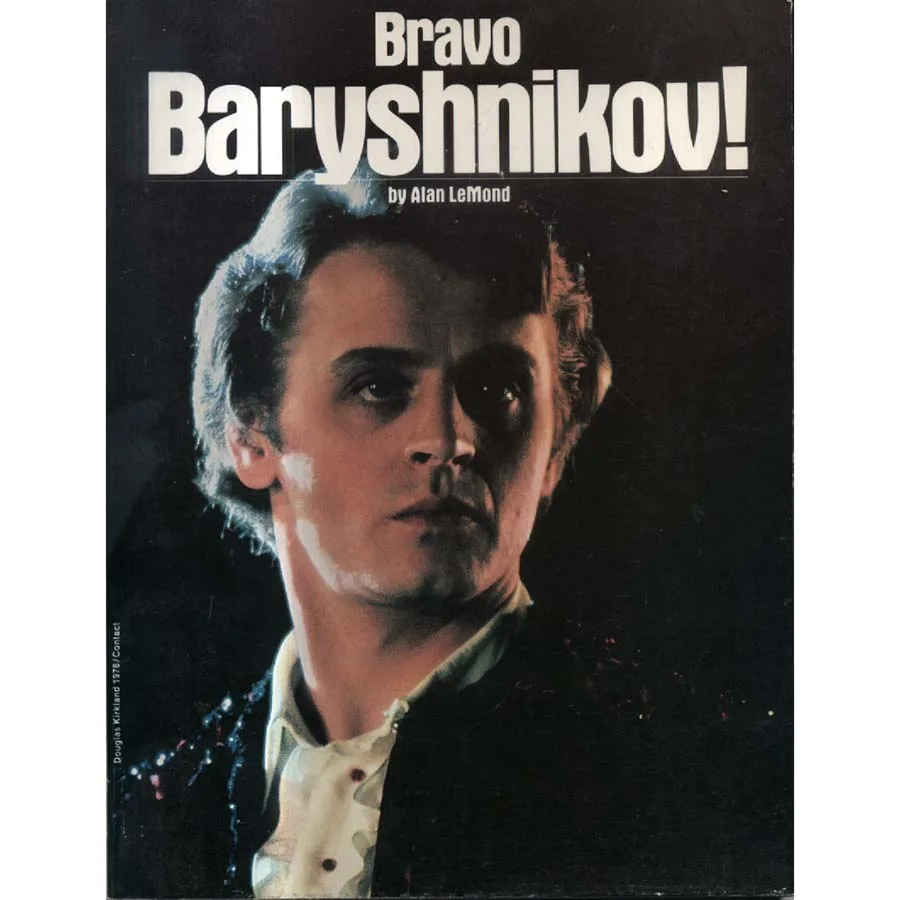
Publisher: Grosset and Dunlap
Format: Paperback
ISBN: 0448163888
Bravo Baryshnikov (1979) – Alan LeMond
Grosset & Dunlap | ISBN: 0448163888
Condition: Good – Slight Tear at Bottom of Front Hinge | Sold by Crappy Old Books
Ballet. That magnificent art form in which extraordinarily disciplined individuals spend years training their bodies to perform feats that ordinary mortals would consider physically impossible, while somehow making the entire enterprise look as effortless as walking to the shops. Behind the grace, elegance and apparently weightless movement lie relentless practice, aching muscles and enough physical punishment to make professional rugby players reconsider their career choices.
And then there is Mikhail Baryshnikov.
Welcome to Bravo Baryshnikov, Alan LeMond’s celebration of one of the most remarkable dancers of the twentieth century, a man whose extraordinary talent transformed him into an international ballet sensation and whose spectacular leaps frequently appeared to challenge the fundamental principles of gravity.
Born in Riga, Latvia, in 1948, when the country formed part of the Soviet Union, Baryshnikov emerged from the formidable Soviet ballet tradition, where technical perfection was pursued with an intensity normally reserved for military operations.
His exceptional abilities brought him international recognition, but his career took a dramatic turn in 1974 when he defected to the West while touring Canada.
For the Soviet authorities, this was a thoroughly unwelcome development. For Western ballet audiences, it was rather like discovering that somebody had unexpectedly delivered a priceless artistic treasure to their doorstep.
Baryshnikov subsequently established himself as one of the great stars of American ballet, dazzling audiences with his precision, athleticism and extraordinary stage presence.
His performances combined seemingly effortless elevation with impeccable technique and expressive power, redefining popular expectations of what a male ballet dancer could achieve.
There is something particularly wonderful about watching a performer apparently suspend himself in mid-air while the audience collectively wonders whether somebody has quietly repealed the laws of physics.
Yet behind the glamour stood a demanding profession requiring extraordinary commitment. Ballet dancers must combine the strength of athletes, the discipline of musicians and the dramatic sensitivity of actors, all while maintaining the pleasant expression of somebody who isn’t experiencing any discomfort whatsoever.
Published in 1979, Bravo Baryshnikov captures its subject during an especially exciting period, when his reputation had become international and his career in the West was flourishing.
The book offers an appealing period perspective on a dancer whose achievements helped bring ballet to audiences far beyond its traditional enthusiasts.
It is also a fascinating artefact of the cultural atmosphere of the late 1970s, when artistic achievement and Cold War politics could become unexpectedly intertwined.
This 1979 Grosset & Dunlap edition, offered in Good condition by Crappy Old Books, has a slight tear at the bottom of the front hinge, which should be noted by collectors. Otherwise, it remains an attractive example of this vintage publication.
An appealing acquisition for ballet enthusiasts, admirers of Baryshnikov, dance historians and collectors of performing-arts literature.
A celebration of extraordinary talent, determination and the remarkable human ability to turn exhausting physical labour into something beautiful.
Because most people would be delighted simply to jump high enough to clear a puddle.
Baryshnikov could apparently leap halfway across a stage, turn gracefully in mid-air and land as though absolutely nothing remarkable had happened.
And without spilling a cup of tea, had anyone been foolish enough to give him one.
Keep browsing: See more Film books Other books by Alan LeMond
